
蒲公英
理论微课堂·学习贯彻习近平党建思想⑤ | 持续推动学习贯彻习近平党建思想走深走实_我的网站

一 | 习近平党建思想为深入推进新时代党的建设新的伟大工程提供了根本遵循和行动指南,对强党强国具有重大现实意义和长远指导意义。
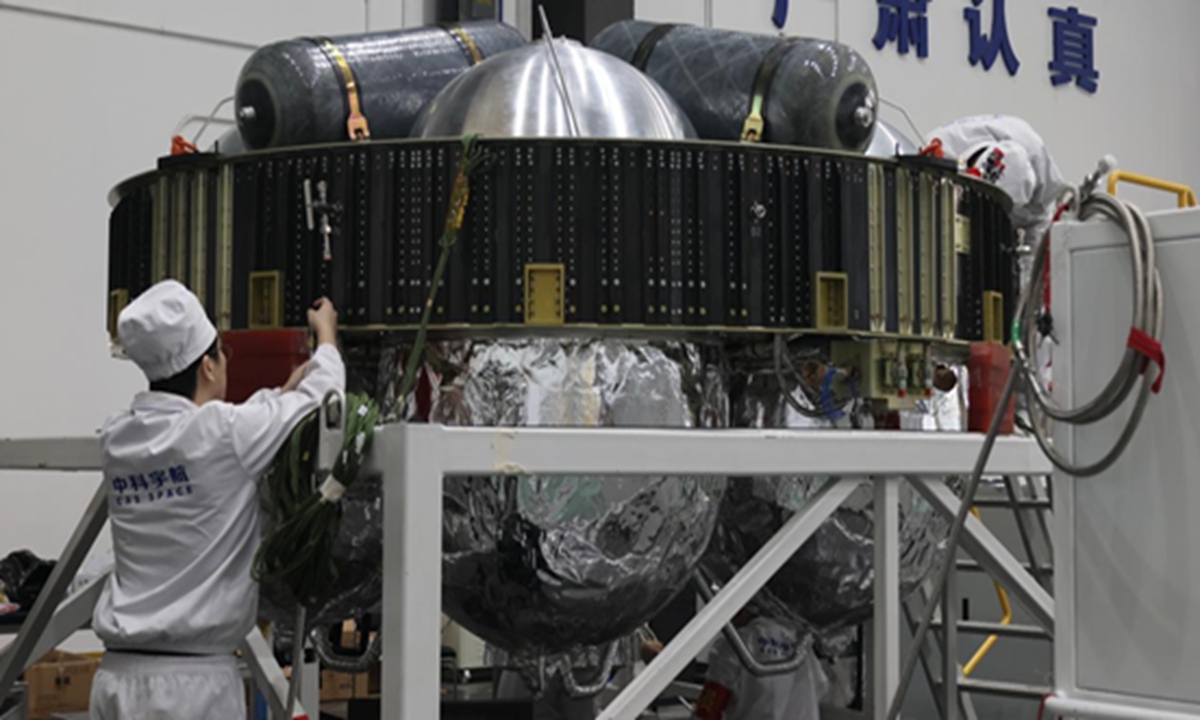
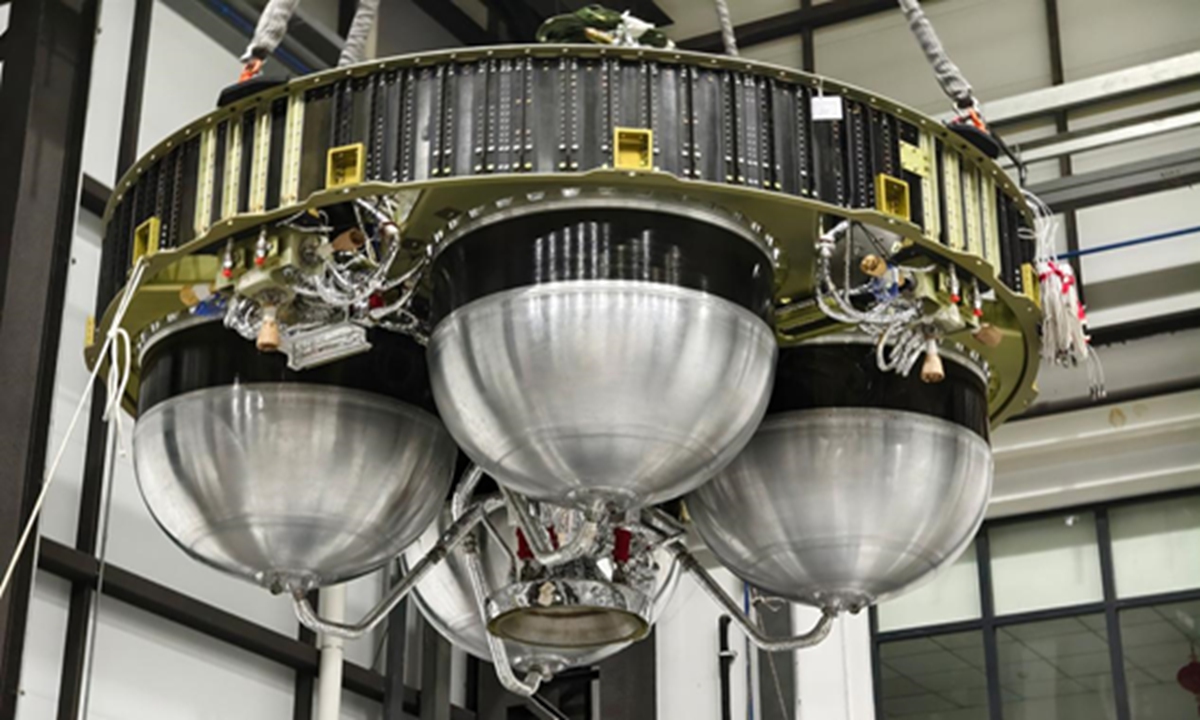
Lixun-1 upper stage, a versatile "space tug" developed by China's commercial space firm CAS Space, is scheduled to make its maiden flight in the first quarter of 2027 after completing a series of key propulsion-system tests, the developer and its chief designer told the Global Times on Tuesday.
The "tug" is designed to ferry satellites from one orbit to another and support missions ranging from constellation deployment to lunar exploration.
While the main stages of a rocket carry payloads from the ground into an initial orbit, an upper stage takes over once the craft is in space. By repeatedly restarting its engine and changing orbit, Lixun-1 can deliver satellites to higher or different orbits, distribute multiple spacecraft to separate destinations during a single launch, or send probes onto trajectories toward the moon and beyond, Global Times learned from the developer.
Yang Haoliang, chief designer of the Lixun-1 upper stage, compared the system to a shuttle service. "If the regular stages of a launch vehicle are like a long-distance bus," - they carry the upper stage and satellites from Earth to a near-Earth parking orbit - the upper stage then takes over as a "space tug," carrying its satellite "passengers" onward to their designated orbital "stops," Yang explained.
That capability can have a direct impact on how efficiently satellites are launched and operated, Yang said. If a satellite has to climb from an initial orbit to its final destination using its own engine, the process can consume a considerable amount of onboard propellant and reduce the fuel available during its operational life. An upper stage can instead perform that orbital transfer, helping conserve satellite fuel and potentially extend its service life.
It can also make one rocket launch do more work. Instead of releasing a batch of satellites into roughly the same orbit, Lixun-1 can repeatedly ignite its engine and maneuver between deployments, sending different satellites to different altitudes and inclinations. Yang said this would help accelerate constellation deployment while improving the efficiency of individual launches.
The practical ambitions behind the system are backed by a major technical milestone reached this month. In August, Lixun-1 completed its PV-001 integrated propulsion-system coordination firing test, during which the entire system operated smoothly for 566 seconds.
Yang told the Global Times that the current Lixun-1 upper stage has a thrust of 20 kilonewtons and can achieve a specific impulse of 315 seconds, which he described as reaching an internationally leading level. The August firing covered the planned profile for the maiden mission, an important step before the system proceeds to flight testing.
The test was more than a demonstration of the engine itself. As an important system-level verification during development, it examined the coordination and engineering reliability of the engine pressurization system, propellant delivery system, propellant management system and servo-control system under the fully integrated configuration.
Of a series of tests that accumulated 5,211 seconds of firing time, the latest one focused on three core technologies: a high-thrust, high-performance 20-kilonewton upper-stage engine capable of multiple starts; balanced propellant delivery from multiple parallel tanks; and a highly reliable integrated electrical system. Their successful verification means Lixun-1 has completed its system-level testing and is ready to move into the flight-test phase, according to the developer.
Lixun-1 has been designed as a modular and generally adaptable upper stage rather than a system tied to only one rocket. It is intended to work with CAS Space's Kinetica-2 and Kinetica-2 heavy-lift variants as well as other launch vehicles, Yang said.
When paired with the Kinetica-2 family, Lixun-1 could significantly expand the rocket's mission range. For communications missions, it could deliver satellites to geosynchronous transfer orbit or even directly to geosynchronous orbit, conserving satellite propellant while supporting the deployment of high-throughput satellites and future 6G communications spacecraft.
For multi-satellite missions, the combination could distribute spacecraft to different orbital altitudes and inclinations during a single launch, potentially serving both low-Earth-orbit constellations and medium- or high-orbit payloads. For deep-space missions, it could place probes onto Earth-moon transfer trajectories and support lunar exploration, Yang said.
The upper stage is designed to be able to conduct more than 20 engine ignitions, autonomously plan orbital-transfer routes and operate under the vacuum and extreme temperature conditions of space. After completing payload deployment, it can also carry out orbital disposal maneuvers to reduce space-debris risks.
Yang said the Lixun-1 and Kinetica-2 combination is designed to cover the vast majority of commercial satellite launch requirements while retaining the ability to participate in major national space projects. More broadly, the upper stage forms part of CAS Space's effort to build launch capabilities reaching medium and high Earth orbits and deep space, extending the reach of China's commercial space sector toward higher orbits and more distant destinations.
。近日,纵览新闻携手中共省委党校(行政学院)推出“理论微课堂”系列视频《学习贯彻习近平党建思想》,与广大党员干部群众一同深刻领会、系统把握这一重要思想的精髓要义。

二 | 如何持续推动学习贯彻习近平党建思想走深走实,实现从“学过了”到“学透了”、从“知道了”到“做到了”的跨越?第五期,听听省委党校(行政学院)党的建设教研部副教授郑时雨的讲解。监制:杨东广 张秀娟 张文君策划:侯鑫辉 张洪杰 陈红梅 于洁统筹:杨佳薇 周国梁执行:孙玉 安军玲 石滨摄制:杨爽 于在洋 王宏飞 冯钰娇视觉:刘旸 蒋中枢。
Current article:http://tbb.chuaiguonengdonggai.buzz/list_oqcaa8/2rqn7k.html
Published on:18:25:39
相关新闻
- 资讯|体医融合进社区,一站式守护“银龄”健康
- 中国足协:各俱乐部7月18日前提交欠薪解决进度报告
- 不想旅行变“修行”?和父母沟通的这些雷区不要踩
- Chinese college students send self-developed satellite into orbit
- LONGi becomes official partner of FC Bayern Munich, uniting solar energy innovation and football passion
- 信达生物:上半年总营收86.18亿元 同比增长44.8%
- 淅川:多元业态深度融合 激活暑期文旅经济
- 三星可折叠手机在国内获得认证:预示着中国市场的推出
- 三部门发文 推进家庭医生签约服务
- 新加坡每年逮捕3000名吸毒者!平均年龄相当于中四学生?
最后更新
- 山西大同农产品上半年出口突破2.5亿元 “大同好粮”加速扬帆海外
- 铠侠发布写不死的数据中心TLC SSD 最高容量7.7TB
- “规模效应+高端破局”看北京越野的“量价棋局”
- 费城一嫌疑人戴“恰吉”面具恐吓、追逐并惊吓居民被起诉
- Malayalam Actor-Director EA Rajendran Passes Away at 71
- 积极财政政策靠前发力稳增长,下半年“提档加速”空间可期
- 「本物の港区女子」高祖父は三井財閥総帥、祖父は国民的作曲家…日本代表の夫を持つ〝令和のお嬢様〟團遥香の〝地元ショット〟に反響「勉強になります!」
- 午间涨跌停股分析:48只涨停股、4只跌停股,金健米业7天5板,登海种业6天3板,万向德农涨停
- Kartik Aaryan and Ananya Panday Open Up About Their Parents Constantly Asking for OTPs
- 京东618第3波阶段三5月28日10点开始6月03日结束,5月31日最便宜划算
热门新闻
- 连续四季不涨反跌!英伟达今夜放榜 该如何克服财报“魔咒”?
- 插混动力/综合续航1360km 定价是关键!一文看懂新款沃尔沃XC60
- 8月26日东方财富财经晚报(附新闻联播)
- 武田中国与蚂蚁健康达成合作
- 时隔6年韩国外长再次访华,解放军出发访日,东亚迎来新格局
- 小米汽车官方回应赛道测YU7刹车片起火:正常现象!制动不会失效
- 北自科技:2026年半年度公司合并报表口径转回信用减值准备2041.81万元,计提资产减值准备72.86万元
- 合计年龄74岁!外媒关注马龙许昕首秀,两人回归将为国而战吗?
- Statement by US and relevant countries alluding to China's missile test launch fully reveals their hypocrisy, double standards: FM
- 河南一地将开展区域核酸检测筛查!_采样_疫情