斗鱼
A mountain standing for millennia finds new ways to tell its story online_我的网站

一 |
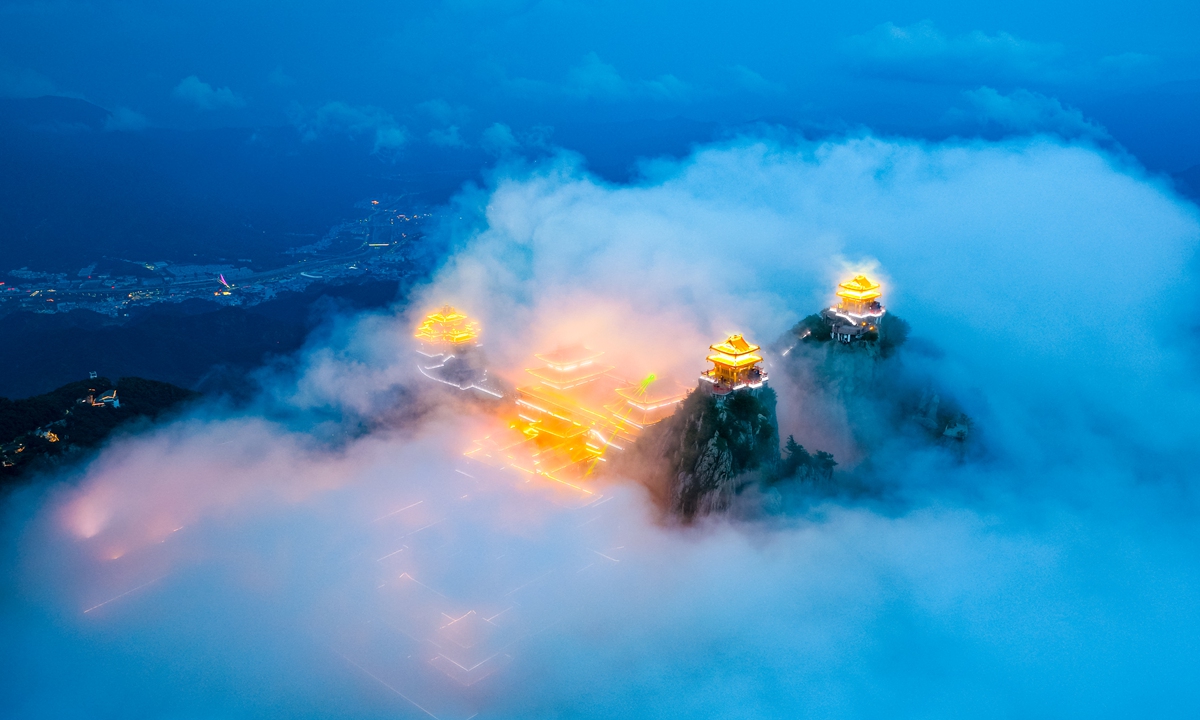
It all began with Laojun Mountain's spectacular summer cloud season. In a recruitment notice issued in July, operator of the scenic spot said July and August offer some of the best chances to see seas of clouds there, and it wanted someone to stay on the mountain and record how the spectacle changed from day to day. The unusual job posting unexpectedly drew over 3,500 entries in about a week, with Li eventually emerging as the mountain's first "cloud sea observer."
Located in Luanchuan county of Luoyang, Central China's Henan Province, Laojun Mountain rises to 2,217 meters and is known for its dramatic peaks, seas of clouds and long history of Taoist culture, according to the mountain's official website.
But how does it feel like to work on top of the mountain, far away from online shopping, food delivery and party with friends?
An unconventional way of seeing
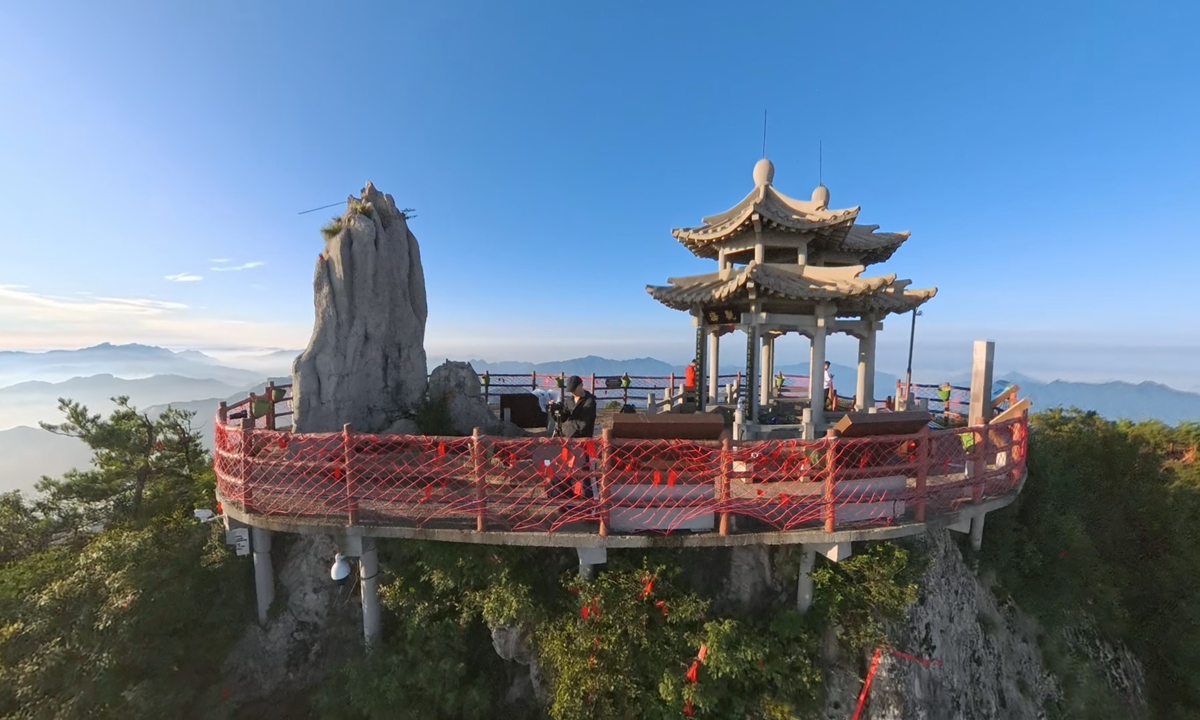
"My days on the mountain quickly settled into a rhythm shaped partly by the clouds, and partly by the cafeteria," Li told the Global Times. He usually got up around 5 am to shoot the sunrise and clouds, had an early lunch as the cafeteria opens at 11 am, spent the afternoon exploring around the mountain, then rushed to cafeteria for dinner before heading back to the observation spots for sunset. The day often ended with editing footage until close to midnight.
"Sometimes there is nothing in front of you from one viewpoint, but after walking a little farther and changing the angle, a small sea of clouds jumps in front of my eyes."
Professional photographers usually seek higher vantage points for better views of seas of clouds, while Li sometimes headed down toward the mountainside. "That was something I really hadn't expected," Zhang Pengyuan, a manager at Laojun Mountain, told the Global Times.
"This was exactly why the scenic spot wanted eyes from outside to find the beauty of the mountain through a different angle," Zhang said.
What set Li apart, Zhang joked, was precisely that he was "not professional." Unable to calculate cloud heights or predict the perfect shooting conditions from weather forecast, Li relied on the simplest method: going out again and again to see what had changed. That sometimes led to compositions the scenic spot's own photographers had never considered. "What he recorded was closer to what an ordinary visitor could actually see," Zhang said.
Li had arrived on the mountain with little professional photography experience. Media reports said that before taking the job, he was not yet proficient with a drone, and his previous videos usually drew only a few hundred or a few thousand views. However, that changed almost overnight when his application video took off, eventually drawing tens of thousands of likes and helping him stand out from more than 3,500 applicants.
From visitors to storytellers
Beyond Laojun Mountain, scenic spots across China have increasingly been inviting young people to take part in content creation, event planning and tourism promotion, often through unconventional jobs tailored to the language and habits of social media.
According to Southern Metropolis Daily, Shennong Valley National Forest Park in Central China's Hunan Province recently recruited 10 "wild men" to dress in animal costumes and interact with visitors in the forest.
The Dixin Valley Scenic Area in Hubei Province also drew more than 3,000 applicants for 12 summer trainee positions to play as NPCs, produce creative content, and work as photographer and tour guide for 10 days.
The idea goes beyond novelty. Scenic spots are increasingly turning to young creators who understand short videos, online trends and the interests of their peers. A tourism short-video contest in Jinhua, East China's Zhejiang Province held in 2025 featured university students presenting the city through vlogs, traditional-style costume transformations and AI-generated art - part of a broader effort to let young people help shape how destinations are seen and experienced.
Young travelers are increasingly drawn to experiences that are immersive, participatory and easy to share, reflecting a broader shift in China's tourism market from "standardized sightseeing" toward more personalized experiences, Zhang Lingyun, a professor and the executive editor-in-chief of the Tourism Tribune, told the Global Times.
As tourism offerings have expanded and competition has grown, travelers have more choices. Changing consumer preferences in China mean many young people now look beyond simply "seeing the beauty" to experiences that feel distinctive, personal and worth sharing on social media.
The internet and social media have accelerated this shift, Zhang said, adding that as "digital natives," Chinese young people are becoming increasingly fluent in short videos, social platforms and online interaction. By bringing young people directly into content production, scenic spots can move beyond simply guessing what tourists want through surveys, and learn from what they actually create and share.
Initiatives such as the "cloud sea observer" can help destinations rediscover themselves through a visitor's eyes while reaching younger audiences more effectively. The goal, Zhang noted, remains the same: better meeting tourists' needs, even as the tools, channels and participants have changed, he said.
On his final morning on Laojun Mountain, Li got up early once again to watch the sunrise. But this time, he lowered the camera.
"That was when I suddenly realized how beautiful the mountain really was," Li said. After 30 days of chasing clouds, searching for angles and turning each day into footage to share with other young Chinese in the online community, he was finally able to simply look.
When Li was really enjoying the last moments on the mountain, he - just like the line from comedy The Secret Life of Walter Mitty - "didn't like to have the distraction of the camera. Just wanted to stay in it."
。
决策者往往在战前或战争期间就会着手谋划战后的安排,因为不管多么漫长的战争,总有结束的那一天。
《外交事务》杂志近日刊登了一篇文章,站在美国和以色列的角度设想了加沙地带的未来,文章开头这样写道:
“在某个时候,爆炸声和枪炮声会停止,以色列在加沙地带的军事行动将宣告结束;然后必须有人统治加沙,但选择很差。”
以色列的战后处理方案有以下几种,按照以方优先级排序依次为:
1、将加沙地带的巴勒斯坦人彻底清空,驱赶到埃及西奈半岛或其他阿拉伯国家,同时给予接收国一定的利益补偿。
至于说清空之后是新建犹太人定居点还是把约旦河西岸的巴勒斯坦人迁徙过来,其实对以色列来说没什么不同,后者相当于一种“置换策略”。
2、把加沙地带的治安和民政事务交给阿拉伯联盟负责。
想法很好,但阿盟已经明确拒绝出面收拾烂摊子,约旦外交大臣萨法迪称:
不难想象,战后的加沙地带必然是百废待兴、低烈度暴力持续不断,阿盟岂会愿意去给以色列做吃力不讨好的“免费警察”?
这是拜登政府的方案,也是目前最现实的方案,下面将详细展开讨论。
哈马斯继续掌控加沙是以色列绝对无法接受的,形同于战败或打了白打,未来将继续面对不可预知的军事威胁。
比哈马斯继续掌权更糟糕的选项是以色列长期留在加沙——这一策略之前实施过,已经被证明是失败的(2005年以色列单方面宣布放弃所有加沙地带的犹太人定居点,从此撤出加沙)。

二 |
因为在媒体聚光灯下统治超过200万敌对的巴勒斯坦人是非常困难的,这些巴勒斯坦人会经常发动低水平的叛乱,让以色列摇摇欲坠的国际形象进一步下降。
《外交事务》杂志文章认为,唯一可行的做法就是把加沙地带交给巴勒斯坦权力机构掌舵,尽管这个方案也很糟糕,但已经是最不坏的选项了。
巴勒斯坦权力机构(法塔赫主导)主张与以色列和西方建立正常关系,并得到国际社会大部分国家的支持。
目前它主要负责着约旦河西岸的巴勒斯坦居民区——约旦河西岸和加沙地带同属巴勒斯坦国,但事实上处于分裂状态,法塔赫与哈马斯均声称自己是唯一合法政府。
美国和以色列觉得它是个扶不起的阿斗,在没有以军帮助的情况下几乎处理不了任何事情,很多约旦河西岸的巴勒斯坦人宁愿向当地民兵组织寻求安全,也不找巴政府。
部分巴勒斯坦人则视其为傀儡政权——现任领导人阿巴斯89岁高龄,已经近二十年没有举行过领导层换届,且上次选举(2006年)获得多数席次的是哈马斯。
因为这种软弱、腐败、民意基础薄弱的现实情况,让以色列对巴勒斯坦权力机构严重缺乏信心。

三 |
内塔尼亚胡就宣称:期望巴勒斯坦权力机构解决加沙的问题是“白日梦”。
道理很简单,约旦河西岸是巴勒斯坦权力机构的大本营,如果连这里都摆不平,怎么能指望它深入哈马斯的老巢加沙地带呢?
不仅如此,以色列还认为阿巴斯政府本质上同情哈马斯的存在。
比如:阿巴斯政府组织编写的教科书充满反以内容,其辖区内的许多公共建筑都用反以人物命名,甚至经常以支付公务员薪水的名义向加沙地带输送资金。
而根据巴勒斯坦政策和调查研究中心公布的一份民调:在加沙地带,57%的受访者认为哈马斯10月7日发动袭击的决定是正确的,37%反对;在约旦河西岸,82%的受访者认为该决定正确,12%的人反对。
西岸的反以民意竟然高过了加沙——部分原因自然是加沙地带居民因哈马斯袭击招致了以色列的激烈报复,承担了后果,而西岸没有。
实际上,以色列国内的强硬派已经对哈马斯和巴权力机构“一视同仁”,以安全部门负责人本·格维尔宣称:
“巴勒斯坦权力机构不是哈马斯的替代品,它是哈马斯的盟友,无论是现在还是战后都应该这样对待它。”
纵然巴勒斯坦权力机构有一万个缺点,但美国和以色列实在找不出更好的选项,最终大概率死马当成活马医。
1、由美国、以色列和阿盟(主要是毗邻的约旦)共同出面培训巴勒斯坦权力机构的安全部队。

四 |
2、从阿拉伯国家内部招募一部分技术官僚,补充到战后的加沙政府中(巴勒斯坦权力机构本身就有一个加沙影子政府)。
3、劝说阿巴斯等老人退休,用新一代充满活力的巴勒斯坦领导人取代他们。
还有另一套不太正统的方案:任由加沙地带混乱下去,逐渐“索马里化”,以色列从中扶持一股或几股强势力量,利用它压制可能复苏的哈马斯。
之所以后者的可能性不大,是因为解决巴勒斯坦问题已成为阿拉伯世界乃至整个穆斯林世界的外交重点。
以美国期望的沙特、以色列建交为例,沙特很可能会把解决巴勒斯坦问题作为前提条件摆上桌面——这是一个比10月7日战争爆发前更加突出的政治难题。
2023年10月7日的袭击爆发后,有美国媒体第一时间称这是以色列的“911时刻”。
紧接着,拜登总统在访问特拉维夫时提醒以色列人:不要被愤怒蒙蔽双眼,不要重覆美国在“911事件”后犯下的错误。
简单点说,推翻敌对政权往往是一件容易的事情,难的是建立一个能够被当地民众认可并提供长期和平发展环境的新政府。
而在中东,以色列的所作所为某意义上其实是由美国来兜底的,所以以色列政客反而没那么担心。
只是对于拜登来说,他任内撤出了一个旧泥潭(阿富汗),又陷入了两处新泥潭(乌克兰和中东),真是令人唏嘘。

五 |
Current article:http://tbb.chuaiguonengdonggai.buzz/list_jrxl/hfz.html
Published on:02:14:10


